Barriers and Meshes Range
Our Barriers and Meshes Range
Polypropylene Mesh
Qlene Mesh®, Polypropylene Surgical Mesh
Monofilament, non-absorbable tissue reconstruction prosthesis. Biologically inert with excellent multi-directional mechanical properties, no frayed edges, and long-term support without harboring micro-organisms.

Dual Mesh, Polyester & Polyurethane
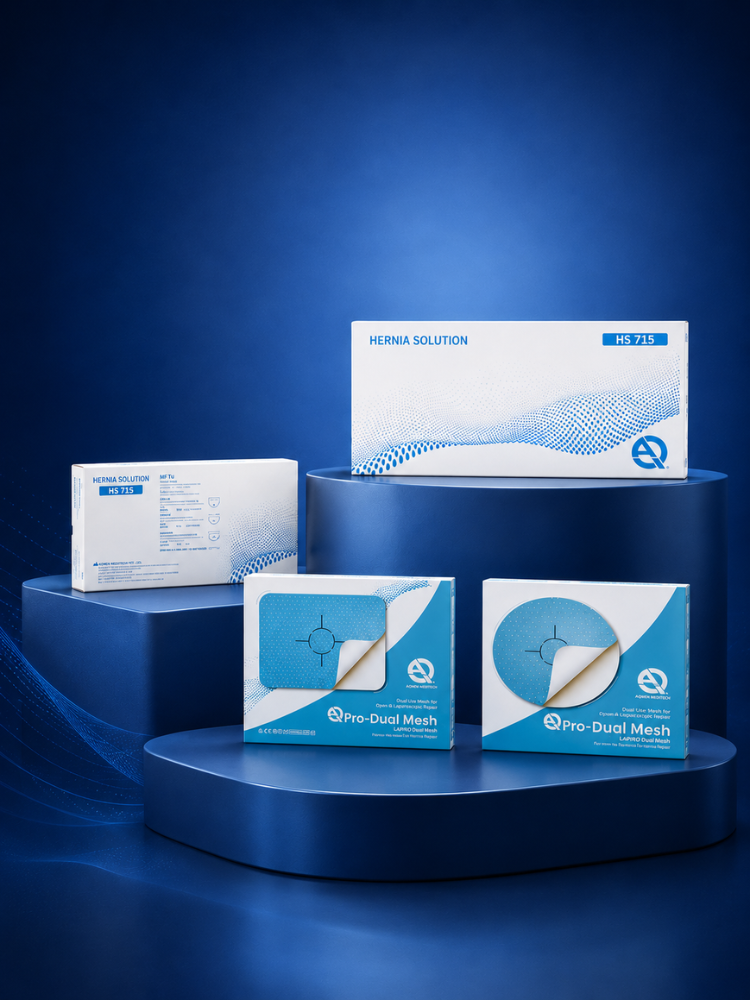
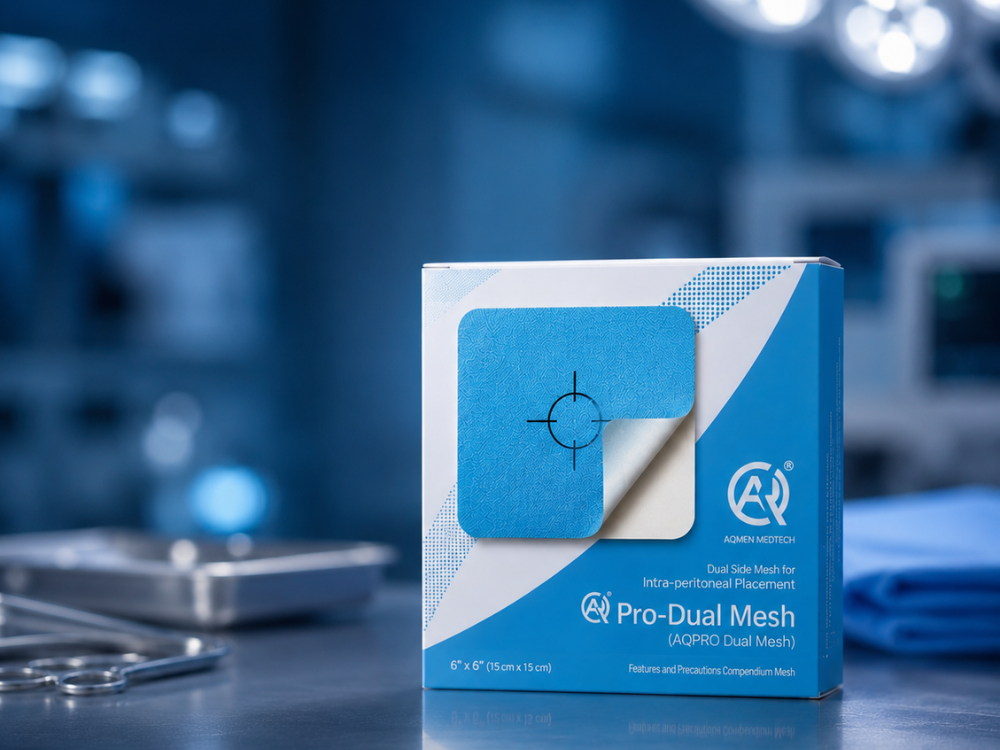
AQPRO-DUAL MESH
Dual-layered mesh combining high-tensile polyester with a hydrophilic polyurethane layer, purpose-built for Intraperitoneal Onlay Mesh (IPOM) procedures. Minimizes visceral adhesion while offering flexible, lightweight handling with visual placement marks.
Dual Mesh, Collagen & Polyester
Collagen-Polyester Composite Mesh
A collagen-and-polyester composite mesh that combines polyester's structural strength with a collagen layer designed to reduce tissue adhesion, offering surgeons an alternative dual-mesh option for reconstructive procedures.
Tackers (Absorbable & Non-Absorbable)
Mesh Fixation Devices
Mesh fixation devices designed to secure mesh in place during laparoscopic hernia repair, available in both absorbable and non-absorbable formats to suit different procedural needs and surgeon preference.
Hernia Combination Packs
HERNIA SOLUTION
Combination packs pairing polypropylene hernia mesh with absorbable and non-absorbable sterile sutures, four commonly used combo packs, six kits per box, for hassle-free procurement and OR readiness.
Why Hospitals Choose Aqmen for Surgical Access
- Manufactured and quality-checked at our state-of-the-art facility
- One of the few Indian manufacturers offering single-layer, dual-layer, and fixation devices under one roof
- Trusted by 7,500+ hospitals across India for consistent, dependable supply
FAQs
Frequently Asked Questions
Single-layer mesh, like polypropylene mesh, is typically used for standard hernia repair, while dual-layer mesh combines two materials, such as polypropylene and polyurethane, to reduce tissue adhesion in procedures like IPOM.
Tackers are fixation devices used to secure mesh in place during laparoscopic hernia repair, offering surgeons a fast, reliable alternative to suturing the mesh to surrounding tissue.
Yes. Polypropylene mesh is biologically inert and bio-compatible, designed to provide strong support for an indefinite period without harboring micro-organisms.
A collagen and polyester dual mesh is often preferred when reduced tissue adhesion is a priority, combining polyester's structural strength with a collagen layer designed for gentler tissue interaction.
A hernia combination pack typically pairs polypropylene hernia mesh with absorbable and non-absorbable sterile sutures, giving surgical teams a ready-to-use set for common hernia procedures.